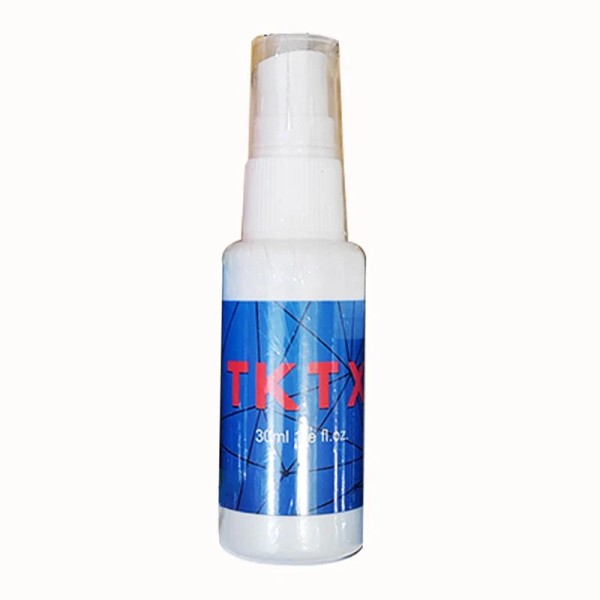
Both stages matter. And there are products built specifically for each one. A tattoo numbing spray handles the first part. A tattoo aftercare cream handles the second. They are not the same thing, and using one does not replace the other.
Here is a quick breakdown of what each product actually does.
What a Tattoo Numbing Spray Does
A tattoo numbing spray contains a topical anesthetic, usually lidocaine, which reduces pain signals at the skin’s surface during a procedure. Lidocaine works by temporarily blocking sodium channels in nerve cells, stopping pain signals from reaching the brain.
According to the Australian Therapeutic Goods Administration, lidocaine is one of the most widely used local anesthetics for topical applications.
Most artists apply the spray just before the session begins or after the first pass of the needle, since broken skin absorbs the active ingredient faster. The numbing effect typically lasts 60 to 90 minutes, then wears off. That is expected and normal.
Not every numbing spray carries the same lidocaine concentration. In Australia, the TGA regulates the allowable percentages in over-the-counter products. Always verify that any product you choose is TGA-listed before applying it to open skin.
What a Tattoo Aftercare Cream Does
A tattoo aftercare cream is applied once the session is complete. By then, the skin has been through some trauma. It’s raw, slightly swollen in some areas, and vulnerable to infection if not properly taken care of.
The main active ingredients in most tattoo aftercare creams include panthenol, zinc oxide, and aloe vera. These moisturize the skin, reduce any inflammation on the surface, and provide a thin protective layer as healing occurs. Some of them may also contain antiseptic properties.
The healing phase typically runs two to four weeks. During that time, the skin peels, itches, and gradually settles into its final appearance. A good aftercare cream supports that process without clogging pores or affecting the ink underneath.
Skipping this step is a real risk. Poor aftercare is one of the most common reasons tattoos fade unevenly or develop complications that require touch-ups.
Do You Need Both?
Yes. They serve completely different purposes at completely different times.
A tattoo numbing spray does nothing for healing. It wears off before you leave the chair. And applying an aftercare cream before or during a session would interfere with the ink and the artist’s work.
The confusion is perhaps because these products are seen as somehow being comparable. They are not. A better analogy is a timeline. A numbing spray is for before and during. Aftercare cream is for everything after.
There are individuals who skip the numbing spray altogether and determine they can handle the pain. This is a personal decision and sometimes a good one, depending upon placement and length of session.
Skipping aftercare cream is a different kind of decision. Skin that is under-moisturised and unprotected during healing does not recover well. The tattoo shows it. Patchiness, dullness, and extended redness are common outcomes when aftercare is ignored.
If you want a clean experience from start to finish, both products have a role to play at the right stage.
Featured Image Source: https://www.numbingcream.com.au/products/tattoonumbingspray
