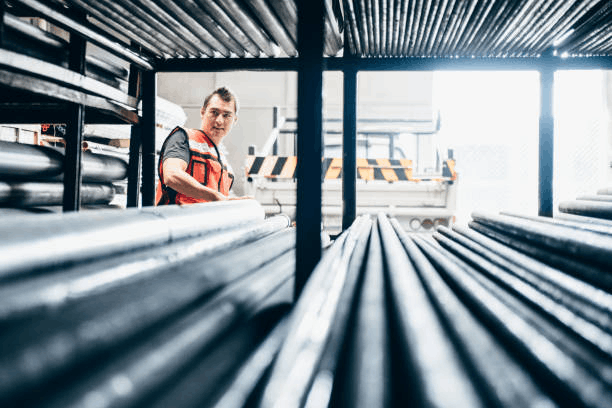
Most stainless steel grades earn their place based on corrosion resistance, and that’s a fair priority for many environments. But when the task involves drilling, threading, or turning at volume, the material’s behavior during cutting matters just as much. Grades like 304 and 316 work-harden under the tool, which slows production and shortens tooling life faster than most shops expect.
When Machinability Is the Difference Between Hitting Deadlines and Missing Them
Grade Selection and Its Real Cost: 416 stainless steel tube is a martensitic grade with added sulfur, and that sulfur is exactly what makes it cut so cleanly. The inclusions it creates act as natural chip breakers, reducing tool pressure and cutting heat in the process. For shops running tight schedules, the difference between this grade and a standard austenitic option shows up fast.
Dimensional Accuracy That Holds Through the Job: Not every stainless steel tube maintains dimensional accuracy through aggressive machining passes. The hardness and microstructure of 416 give it more stability than softer grades during high-speed operations, so components come out closer to spec with less rework. When tolerances are measured in thousandths of an inch, that consistency has a direct effect on scrap rates and throughput.
What Happens to Cycle Times and Tool Life When the Grade Is Right
Surface Finish as a Production Variable: One area where 416 quietly reduces cost is surface roughness on machined components. Because the material cuts cleanly, threads, bores, and turned profiles need less secondary finishing work. That reduction in post-machining time is easy to overlook on a single part, but across a high-volume production run, it shows up in cycle time, labor cost, and delivery schedules.
Tooling Costs and the Math Behind Grade Selection: Switching from 304 to 416 for a recurring job has a noticeable effect on tooling expenses. Carbide inserts and drill bits last longer when the material doesn’t generate excessive heat or cause edge build-up during cutting. That saving is small per unit, but the numbers shift meaningfully across a full production run, especially for shops operating on tight margins.
Sourcing the Grade Without Compromising Consistency
What Supplier Reliability Actually Means in Practice: Getting the right material grade consistently is harder than it might seem when sourcing from general distributors. 416 tubing needs to meet specific heat treatment requirements to perform as expected, and those conditions should be verifiable through mill certifications. A supplier with a focused inventory, documented traceability, and ready stock in common sizes removes the guesswork from every order.
Material Condition and What It Means for Machinability: A common issue when sourcing specialty grades is receiving material that meets general spec but not the specific temper or finish the application requires. With 416 tubing, the cold-drawn or annealed condition affects how the material behaves on the machine. Getting that detail confirmed at the order stage prevents problems that only show up once the tube hits the shop floor.
Applications That Demand This Grade Specifically: This is where 416 tubing shows up most often across industry:
- Valve stems and pump shafts: used in fluid control systems where machining accuracy matters
- Threaded fasteners and mechanical studs: require close tolerances and clean thread profiles
- Gear shafts and precision spindles: consistent surface finish and dimensional accuracy are required
- Hydraulic fittings: tight tolerances are a baseline, not an option
- Instrument and surgical housings: burr-free surfaces are non-negotiable in these applications
The Grade Decision That Pays Off Before the First Cut Is Made
For precision machining applications where cycle time, surface quality, and part accuracy all matter, 416 stainless tube is a practical, well-documented choice that reduces cost at multiple points in the process. Specialized distributors carrying this grade with full mill certifications are worth finding. To explore 416 stainless tubing options from a focused North American distributor, visit archcitysteel.com.
Featured Image Source: https://media.gettyimages.com/id/949475878/photo/warehouse.jpg?s=612×612&w=0&k=20&c=a1vzMMe0fGYUFI8CvEQg3PYi3UdvLOgKMFwpZTZEwpM=
