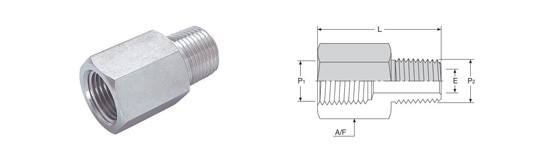
Stainless Steel High Pressure Pipe Fittings for Corrosive and High-Temperature Services

Chemical plants, refineries and offshore platforms move fluids that attack metal from the first day of service. Acids, chlorides and steam raise both temperature and corrosion risk across every joint. Carbon steel rarely survives that combination for long. Selecting stainless steel high pressure pipe fittings with the correct alloy grade keeps those joints tight through long production runs.

Where Aggressive Media Meets Metal

Alloy Grade as the First Line of Defence: Stainless steel high pressure pipe fittings in 316 and 316L resist sulphuric acid, seawater and process condensate far better than 304 equivalents. Added molybdenum, roughly two to three per cent, slows pitting at weld zones and thread roots. Monel and Hastelloy suit hotter chloride streams. Grade choice sets the ceiling for everything that follows.

Control Air under the Same Attack: Control air and actuator lines run through the same corrosive atmosphere as the process piping. Pneumatic couplings in stainless steel hold their seal when salt spray and acid vapour eat into plated brass alternatives. Quick connect designs also cut downtime during instrument changeovers on offshore decks, where a single air leak can stop a shutdown valve stroking.

Reading the Failure Modes before They Start

Chloride Attack beneath Insulation: Austenitic stainless steel performs well until chlorides concentrate under damp lagging at 60 to 200 degrees Celsius. Stress corrosion cracking then travels through the wall with almost no warning. Field crews often trace a leak back to insulation damage rather than the fitting, so corrosion resistance depends on the whole assembly. Inspection routes should reflect that reality.

Sensitisation and the Low Carbon Answer: Welding heat can precipitate chromium carbides at grain boundaries, leaving the metal open to intergranular corrosion in acid service. The L grades cap carbon near 0.03 per cent to limit that reaction. Correct heat treatment after forming restores the passive film and holds hardness within specification. Mill certificates confirm it, and asking for them costs nothing.

Pressure, Heat and the Numbers that Hold Up

Derating as Temperature Climbs: A fitting rated at 413 bar or 6000 psi at ambient loses a large share of that capacity by 400 degrees Celsius. Thermal expansion also loosens threaded joints through repeated cycling. Rating tables for stainless steel high pressure pipe fittings should be read at the actual design temperature, never at room conditions. Design margin disappears quickly otherwise.

Dissimilar Metals and Early Failure: Mixing metals along one line invites galvanic corrosion where two unlike components meet. Stainless bodies paired with plated steel adapters fail early in marine air. Matching the alloy across tube, fitting and pneumatic couplings removes that weak point and simplifies spares holding. Small savings on adapters rarely justify the later repair bill.

Checks that Catch Problems Early: Verification lists work better than long specification sheets when procurement time is short. Hydrostatic testing, helium leak checks and dimensional inspection each catch a different fault, and none replaces the others. Records held under ISO 9001:2015 trace a batch back to its melt, which settles most supply disputes quickly. These checks deserve priority on corrosive duty.

  • Material certificates confirming 316 or 316L composition and carbon content
  • Pressure ratings quoted at design temperature in both bar and psi
  • Helium leak test results for vacuum and gas service
  • Thread standards matched across the line, NPT or BSP throughout
  • Traceability marking on every body, nut and ferrule

Building Lines that Outlast the Media

Long service life in corrosive plant comes from alloy choice, verified ratings and honest test data rather than the lowest quoted price. Engineers who specify against real design conditions replace fewer joints and record fewer unplanned outages. The specification sheet is the cheapest safeguard available. Speak to a manufacturing team with in-house testing before placing the next order.

Balancing Safety With Comfort for Today’s Foam Needs

Selecting a foam based on just softness is outdated. Modern manufacturers need to consider regulations surrounding comfort, durability, and safety. Daily use and safety compliance are critical for the materials used by furniture brands, automotive manufacturers, makers of healthcare equipment, and commercial interior design.

Flame-retardant (fr) foam is essential for safety design. Compared to conventional foam, FR foam decreases the risk and spread of flame. This makes it the preferred foam for use in safety-regulation-intensive, fire-risk foam applications for seating, transportation, and healthcare environments.

Flame-Retardant (fr) Foam Benefits

  • Flame retardance
  • Performance compliance with fire safety regulations
  • Integrity of structure is maintained with foam use
  • Foam is available in varying densities and firmness
  • Reduced replacement costs due to improved durability

Prioritizing Safety Over Comfort Foam

There are different levels of importance when it comes to safety and comfort. Foam that has safety (in this case, fire safety) as a primary focus is referred to as flame-retardant foam. There are other applications, however, that focus on pressure relief and ergonomics. There is a need for these types of supportive materials in seating and mattress systems, as well as in various orthopedic products. These materials need to be able to adapt and contour to the body and also be able to recover.

Fire remains the most impactful safety concern globally. The World Health Organization (WHO) estimates that burns from fire cause 180,000 deaths annually and are the most extreme injuries l sustained in daily use environments.

When differentiating between safety-first and comfort-first foam, one has to consider the environment the product will be used in. Product safety will more likely address fire safety compliance if the product is a commercial product. On the other hand, if the product is a consumer sleep product, it will focus more on pressure relief and comfort. Manufacturers usually employ a combination of foam layers to address both concerns.

Things to Consider When Choosing Foam

  • Fire safety standards
  • Pressure relief
  • Density
  • Durability
  • Temperature responsiveness
  • Application-specific standards

If appropriate foam is chosen to begin with, manufacturers have less of a chance to face challenges related to performance and compliance later on. According to Fortune Business Insights, the flexible foam market will continue to grow over the next decade due to increases in demand from the furniture, bedding, automotive, and packaging industries.

When Memory Foam Sheets Might Be Best

Memory foam sheets have some unique benefits for applications prioritizing comfort. As opposed to standard foam, memory foam uses the heat and pressure applied to it to take the shape of the user. This characteristic helps it distribute force evenly across the surface and helps eliminate pressure build-up. This can come in handy when designing a mattress, cushion, or medical aid.

Popular Uses of Memory Foam Sheets

  • Mattresses (and mattress toppers)
  • Cushions in ergonomic office chairs
  • Cushions in wheelchairs/medical chairs
  • Inserts for car seats
  • Orthopedic/medical supports
  • High-end hotel bedding

Before settling on a memory foam sheet option, manufacturers must check a few critical features first to ensure they achieve their desired result.

What needs to be Checked First

  • Density consistency
  • Compression recovery
  • Pressure-relief performance
  • Surface finish quality
  • Durability testing results
  • How memory foam interacts with other foam layers

Conclusion

When considering various types of foam, the most important factors are safety, comfort, durability, and adherence to applicable regulations. When designers understand the advantages of the various types of foams, they are able to select the most appropriate foam technology for a given application.

How a Locksmith in Arlington VA Supports Homeowners with Rekeying, Upgrades, and Peace of Mind

Buying a new place should feel like a fresh start, yet a quiet question often lingers. Who else still holds a working key? A previous owner, an old tenant, a contractor from years back. A skilled locksmith in Arlington VA helps settle that unease by reviewing access points and suggesting practical fixes.

When Old Keys Become a New Worry

Fresh Ownership and Old Access: New ownership rarely comes with a full record of who once received a key. Cleaners, neighbors, dog walkers, and former residents might still keep copies tucked away somewhere. A skilled locksmith in Arlington VA can retire those old keys through rekeying, so only the current household holds working access to every interior and exterior door.

Lost Keys and Sudden Doubt: Even settled homeowners face sudden moments of doubt. Misplacing a set at the gym or losing keys during a hectic move can mean a stranger now carries the means to open a front door. Rekeying voids those missing keys quickly, turning a stressful gap in home security into a straightforward afternoon fix that restores confidence.

The Quiet Work behind a Rekey

Inside the Lock Itself: Rekeying looks simple from the outside, though the real work happens deep within the lock body. A trained technician carefully resets the pin tumbler mechanism so the original key no longer turns while a freshly cut one does. The existing door hardware stays in place, which keeps the cost far lower than a complete lockset replacement.

Matching Fixes to the Home: Not every situation calls for the same answer. An experienced locksmith in Arlington VA weighs the age of a property, the number of doors, and daily routines before recommending a path forward. A compact townhouse with two entries needs a different plan than an older home with side gates, basement doors, and detached storage.

Stronger Locks without a Full Remodel

Reinforcing the Weak Points: Upgrades do not always mean tearing out doors and frames. Sometimes stronger security starts with proper strike plate alignment, longer screws driven into the stud, and a deadbolt that seats fully every time. These small structural fixes resist forced entry far better than a worn latch, and they cost only a fraction of what many homeowners expect.

Smart Options and Everyday Ease: Smart locks add another welcome layer of daily convenience. Keypad and phone-based entry means no more quiet panic over losing keys on a rushed morning, and temporary access codes can be handed to guests or workers, then removed later. For rentals, this kind of control makes tenant turnover smoother without a separate visit each time.

Warning Signs Worth Acting On

Clues Your Locks Are Failing: Locks rarely fail without any warning at all. A few small signs tend to show up well before a key snaps off inside the cylinder or a bolt refuses to turn. Watching for these early clues can save a homeowner from a stressful lockout or a rushed emergency call later on:

  • A key that sticks or must be jiggled to turn
  • Visible rust or grit inside the keyway
  • A deadbolt that no longer lines up with the frame
  • Loose handles or a lock that wobbles in the door
  • Keys that feel worn thin or slightly bent

Acting before It Becomes Urgent: Catching these signs early keeps small problems from turning into big ones. A quick service call to adjust, repair, or rekey a lock costs far less than an after-hours lockout or the cleanup after a break-in. Most of these issues take under an hour to resolve once a professional inspects the door up close.

A Home That Finally Feels Secure

Peace of mind at home rarely comes from luck. It comes from knowing exactly who can open each door and trusting that every lock does its job. Whether the need is a simple rekey, a hardware upgrade, or a full security review, reach out to a local locksmith today and take back control of your doors.

Why Hiring Professional Electricians in North Bay Is Essential for a Safe Home

Electricity is used in nearly all areas of modern life, lighting, kitchen appliances, heating and cooling, and home entertainment. Although electrical systems are not used to notice the presence of electrical systems at work, they are crucial to the safety and functionality of the homes. You could be renovating your property, or you might need some assistance installing electrical systems; the services of qualified electricians North Bay, can make a huge difference.

Undertaking electrical work by yourself can appear as a way to save money, yet, a poor installation of electricity could result in electrical accidents, breaking the equipment or even igniting a fire-related accident. Employing trained people offers tranquility besides securing your estate as well as your family.

Why Professional Electricians Matter

Electrical work involves technical expertise, specific equipment and proper knowledge of the safety standards. Professional electricians are also trained to recognize any potentially dangerous situations, properly diagnose electrical issues, and perform the repairs or installations within the industry limits.

The Electrical Safety Authority (ESA) Ontario recommends that electrical installations be in accordance with the Ontario Electrical Safety Code to control the risk of electrical fire, electric shock, and equipment failure.

Services Offered by Electricians in North Bay

Qualified electricians North Bay offer a variety of household and business electrical services to suit various needs of the property.

The most prevalent services are:

  • Electrical repairs
  • Lighting installation
  • Panel upgrades
  • Circuit breaker replacement
  • Wiring for renovations
  • Surge protection
  • EV charger installation
  • Safety inspections

Why Choose a Residential Electrician in North Bay?

Homes have unique electrical requirements that differ from commercial buildings. A qualified residential electrician North Bay would know the local building codes, contemporary electrical systems, and special requirements of the homeowners.

In the construction of a new house or in the renovation of an old house, residential electricians make sure that the wiring, outlets, lighting, and electrical panels are properly installed to enable normal living.

Benefits of Hiring a Residential Electrician

There are some benefits of working with an experienced residential electrician.

Enhanced Safety

If the installation is done correctly the risks of electrical faults, overloaded circuits and fire risk are minimized.

Reliable Electrical Performance

Professionally fitted systems are more efficient, and fewer repairs are required over time.

Compliance with Local Codes

Licensed electricians make sure that all activities are in line with the necessary electrical regulations and inspections.

Long-Term Cost Savings

Workmanship will help prevent expensive repairs as a result of defective installation or damaged electrical fittings.

The Canadian Centre of Occupational Health and Safety (CCOHS) recommends that electrical hazards in the environment at residential and workplace levels be achieved by appropriate electrical installation, maintenance, and avoiding any hazards.

Conclusion

Electrical systems are too important to leave to chance. Engaging qualified electricians is a way of making sure that the electrical work is performed safely, effectively, and to recognised standards. You might need regular repairs, domestic electrical services, or specialised electrical setups, but by employing an experienced residential electrician, not only are you protecting your property, but you can also be sure of quality electrical services in the next several years.

Moss, Algae and Weeds: What Keeps Coming Back on Dublin Driveways

You cleaned the driveway in April. It looked brilliant for about six weeks. Then the green film crept back along the north side, a weed pushed up through a joint near the gate, and by September the whole thing looked much the same as before. Most people blame the executed job. The job was probably fine. Driveway cleaning in Dublin fails on follow-up, not the wash, and the reason lies beneath the surface where nobody looks.

Let us break it down. Moss, algae, and weeds are three separate problems that happen to appear in the same place. They need different treatment, which is why driveway cleaning in Dublin often gives disappointing results when everything gets one pass with a pressure washer and no thought about what comes next.

Why Moss Comes Back on Cobblestone and Concrete

Moss needs damp and shade. Dublin supplies plenty of both.

Look at where yours grows. North-facing side, under the hedge, along the wall where the sun never reaches by two in the afternoon. That is not a coincidence. Cobblelock is porous, so it holds water on the surface, and moss anchors into that dampness rather than into soil.

Wash it off, and the spores stay behind. They always do.

The paving stays damp, the shade stays put, and within two months, the green comes back exactly where it was. Most Dublin cleaning services stop at the wash and never look at why the surface stays wet. Cutting back a hedge or clearing a blocked gully changes more than another wash ever will.

Algae Is the Slippery One, and It Is a Safety Problem

Black and green algae look like stains. It behaves like ice.

Wet algae on a sloped Dublin driveway is genuinely dangerous, and older residents feel it first. Perhaps that sounds dramatic. Ask anyone who has gone down carrying shopping in November, and they will tell you otherwise.

It gathers where water sits. Check these spots:

  • Low points where puddles form after rain
  • The strip beside the downpipe
  • Any dip near the garage door
  • Kerb edges where run-off collects

Standing water is the actual cause. Clearing it matters as much as removing what grows in it.

Weeds in the Joints Are a Structural Issue

Weeds in cobblelock joints are not really a cleaning problem at all.

Kiln-dried sand fills those joints and locks the blocks together. Over the years, the sand washes out, gaps open, dirt blows in, and seeds settle. The weed is a symptom of missing sand.

Pull it out, and you leave a bigger gap than before. Blast it with too much pressure, and you strip more sand from the surrounding joints, which is worse again. This is where careless power washing damages a driveway rather than restoring it.

Some cleaning services skip the joints entirely because it takes time. The driveway looks perfect on the day and drops apart by spring.

Final Thoughts

Clean 4 U handles power washing and driveway cleaning across Dublin with permanently employed, insured cleaners and eco-certified products that will not harm your planting or your pets. The same person comes each time, so they know your gate, your drainage, and where the green starts. Cleaning services in Dublin vary hugely in this work. Ask what happens to the joints before you book anything.

Why Should You Never Sign a Franchise Agreement Without Legal Review

The franchise business model has been booming recently, especially due to the social media platforms. Once a business goes viral, it generates demand across several markets. However, it is usually not possible to scale the business, especially in remote locations. That is exactly where the franchise model steps in. It enables business owners to franchise their business. This way, they don’t have to be physically present at the location but still capture the market. It is also a great solution for franchisees, as they can benefit from the goodwill of an established business while operating with greater freedom.

However, franchise businesses are not as simple as you might assume. In fact, the greater the distance between the franchisor and franchisee locations, the more complicated it can get. In several situations, it becomes an overseas distance involving the laws of two different nations. In such situations, it is very important to have proper paperwork and a systematic approach. This usually starts with a franchise agreement contract.

What Is a Franchise Agreement Contract?

A franchise agreement is a contract that outlines the mutually agreed-upon terms between the two parties governing how they will conduct the franchise business. It states the rules governing how the franchise will operate, as well as other aspects of the franchisor’s business.

This usually includes factors like fees, royalty payments, training, operational standards, rights to territories, marketing commitments, use of intellectual property, the period of the agreement, and its renewability. In light of the far-reaching effects that these elements have on the success of the two parties, all must be properly drafted.

How a Franchise Agreement Contract Benefits the Franchisor and Franchisee

Having your franchise agreement drafted and vetted by a domestic franchise attorney is beneficial, regardless of whether you are the franchisor or the franchisee. Here is how it will benefit you in either situation:

Benefits of a Well-Drafted Franchise Agreement Contract

  • One of the biggest factors involved in any franchise business is the franchisor’s brand value and goodwill. A well-drawn franchise agreement contract will help you protect exactly that. It clearly outlines how to use trademarks, business methods, and proprietary systems, helping you maintain brand consistency across locations.
  • A well-drawn franchise agreement contract also establishes operational standards. People go to a franchise store expecting the same quality as the original. To deliver the same to the customer, it is very important to have rules regarding quality control, customer service, suppliers, and business practices.
  • It is not uncommon for a franchisor and franchisee to have different opinions down the road. A domestic franchise attorney is aware of this and therefore prepares in advance by clearly defining the terms related to termination, compliance, and dispute resolution, which can help prevent future misunderstandings.
  • A franchise business model is not all about the franchisor and their brand’s goodwill. The franchisee also has several rights. A good franchise agreement highlights this, helping franchisees better understand their rights and scope of operations.

Conclusion

Franchising is a great business model, but for it to work properly and smoothly, you will need the assistance of a good domestic franchise attorney. They understand local laws and franchising laws, and have the required knowledge of how the business model operates in international markets. They will ensure that your franchise agreements are well-drafted and free of loopholes that could cause problems later. Getting legal counsel involved from the get-go is the ultimate legal protection that every business wishes for.

Teacher Scheduling Software Reduces Scheduling Conflicts Before They Even Happen

Scheduling conflicts drain time from school leaders every spring. A single overlooked overlap between two singleton courses can push dozens of students into schedule changes weeks later. Teacher scheduling software gives administrators a way to catch these problems early, during the build itself, rather than after schedules reach families. That timing difference matters more than most people realize.

Catching Collisions Before the First Bell

Accuracy on the First Build: Teacher scheduling software helps schools produce accurate master schedules on the first attempt, cutting conflict resolution from weeks down to days. The system checks teacher availability, room capacity, course demand, and student requests at the same time. Manual builds handle each factor separately, which is exactly where conflicts slip through. Perhaps the biggest gain is real confidence in that first draft.

Fewer Corrections After Release: Scheduling efficiency improves when conflicts get flagged before they turn into real problems. Counselors spend less time reworking student requests in August. Teachers receive stable assignments earlier, which helps with lesson planning. The ripple effect reaches families too, since fewer schedule changes mean fewer disrupted first weeks. Small errors caught early tend to stay small.

Where Manual Builds Break Down

The Constraint Problem Nobody Sees Coming: Large high schools juggle hundreds of course sections, shared lab spaces, part-time staff, and traveling teachers. Weak resource allocation shows up as overbooked rooms and electives that never fit anywhere. Predictive systems model these constraints during the build phase and surface the collisions before anyone commits to a working draft.

Why One Fix Creates Two New Problems: Manual conflict resolution in a large school can stretch across three or four weeks. Someone spots an overlap, adjusts a section, and that adjustment creates fresh overlaps somewhere else. Teacher scheduling software runs millions of calculations across the full schedule at once, so a fix in one place accounts for every other constraint simultaneously.

The Hidden Cost of Every Overlap

Class Time You Never Get Back: Every unresolved conflict costs instructional time. Students sitting in the counseling office during the first week are not in class. Teachers covering mismatched rosters lose early momentum. When the master schedule holds up from day one, class time starts on schedule and stays protected through the semester. That is the quiet payoff.

Conflict Sources Worth Checking First: Most conflicts trace back to a handful of predictable causes. Before building, review these areas:

  • Singleton courses that land in the same period
  • Teachers assigned beyond contract limits or without prep periods
  • Rooms double booked for labs, PE, or testing
  • Student course requests that exceed available seats
  • Part-time staff available only on certain days

What Fewer Fixes Actually Means: Schools that review these sources before building report fewer surprises later. Scheduling efficiency is not really about speed alone. It reflects how many corrections a schedule needs after release. A build that needs five fixes beats one that needs fifty, even if both took the same amount of time to create.

A Schedule That Holds From Day One

Start by auditing where last year’s conflicts actually came from, then decide which constraints deserve attention first. Schools that move to predictive scheduling tools consistently release cleaner first drafts and calmer opening weeks. Explore an intelligent scheduling platform before your next build cycle begins and see how many conflicts never happen at all.

Featured Image Source: https://plus.unsplash.com/premium_photo-1683121693735-df6b63dc5b8b?w=600&auto=format&fit=crop&q=60&ixlib=rb-4.1.0&ixid=M3wxMjA3fDB8MHxzZWFyY2h8MzN8fHNjaG9vbCUyMHN0dWRlbnR8ZW58MHx8MHx8fDA%3D

TM44 Inspection in Manchester Is Supporting the Shift Towards Smarter Energy Management in Commercial Buildings

Commercial buildings are facing closer attention on how heating and cooling systems operate, with TM44 inspection in Manchester services helping organisations review air-conditioning performance against current expectations. As energy prices and environmental responsibilities continue to influence decisions, property teams are looking for clearer information about their existing systems.

Building Performance Is Receiving Greater Attention

Reviewing Air-Conditioning Systems: A structured TM44 inspection in Manchester assessment gives commercial property owners a clearer picture of how their air-conditioning systems are performing. The process examines equipment condition, controls, and operating practices to identify areas where adjustments may support improved building management and informed future decisions.

Assessing Financial Considerations: Understanding the TM44 inspection cost helps landlords and facilities teams plan compliance activities without unexpected financial pressures. Costs can vary depending on system size, location, and complexity, so reviewing requirements early allows organisations to prepare suitable budgets while maintaining their legal responsibilities.

Compliance Checks That Support Better Decisions

Planning Inspection Requirements: Commercial operators often review TM44 inspection cost details before arranging assessments across multiple properties. A planned approach helps businesses understand the financial commitment involved and manage inspection schedules properly, particularly when several buildings require certification within similar periods.

Maintaining Regulatory Records: Proper documentation plays an important role in compliance management. Energy Performance Certificates provide information about building energy ratings, while TM44 assessments focus specifically on air-conditioning systems. Together, these records help property stakeholders maintain a clearer view of building performance obligations.

Practical Steps Behind Professional Assessments

Reviewing System Controls: During an inspection, assessors examine areas such as temperature settings, controls, and maintenance records. Air conditioning systems require regular attention because poor settings or outdated controls can affect operating costs and occupant comfort over time. A detailed review provides useful information for future planning.

Checking Operational Information: Documentation reviews are also part of the inspection process. Building energy management records can help assessors understand previous maintenance activities, system usage patterns, and possible areas requiring attention. This information supports more accurate recommendations based on the building’s current condition.

Clear Actions For Long-Term Property Management

Supporting Portfolio Planning: Businesses managing several commercial properties can use inspection findings to organise future maintenance priorities. A consistent approach helps facilities teams compare system conditions across different locations and decide where upgrades, repairs, or further assessments may be required.

  • Reviewing existing air-conditioning records before inspections
  • Tracking certificate dates to maintain compliance schedules
  • Monitoring system performance after recommendations are provided
  • Coordinating inspections across multiple commercial locations

Encouraging Responsible Building Practices: Better information allows property owners and managers to make decisions based on actual system conditions rather than assumptions. The repeated review of air-conditioning performance can support responsible energy management and help businesses meet wider sustainability expectations.

Moving Towards Better Managed Commercial Spaces

Creating a Stronger Compliance Routine: Commercial property owners that arrange timely assessments can maintain clearer records and reduce uncertainty around regulatory duties. A planned inspection process supports better awareness of system performance and helps organisations respond to changing expectations within the UK commercial property sector.

Taking the Next Compliance Step: Reviewing air-conditioning requirements and arranging a suitable assessment can help businesses maintain accurate records and understand their building responsibilities. Organisations seeking clarity on their obligations can book a TM44 inspection to support ongoing compliance and informed energy management decisions.

External Hard Drive Technology Is Supporting Better Data Management for Everyday Users

Daily life now runs on data. People capture more photos than ever before, and they keep work files spread across several gadgets at once. That quiet shift has turned reliable storage into something most users end up thinking about. Among the computer accessories built for this demand, dedicated storage drives have proven useful for homes and small offices.

When storage stops keeping up

Where Computer Accessories Earn Their Keep: Built-in memory fills quickly once photo libraries and project folders pile up over a few years. This is where the right computer accessories make a real difference, since a separate drive hands back room on the main machine and keeps everyday performance from slowing to a crawl during heavy file work.

Backup That Does Not Depend on the Internet: A dependable external hard drive gives users a copy of their work that sits within arm’s reach and does not rely on a steady connection to reach it. Files move across in minutes, and a second copy means a sudden laptop failure no longer puts years of photos and records at risk.

Finding the balance between speed and space

Why Drive Speed Shapes the Experience: Transfer time becomes obvious the moment a folder of large video clips needs moving. A solid-state drive reads and writes far quicker than older spinning models, so backups finish sooner and editing straight from the drive feels smooth. For anyone working with bulky media, that speed quickly turns from a luxury into a basic need.

How Much Room Is Enough: Capacity tends to be the next question, and the honest answer depends on what gets stored. A terabyte suits most homes, while heavy photo and video collections climb higher fast. Good computer accessories now span a wide spread of sizes, so buyers can pick a drive that fits today and leaves headroom for the next couple of years.

Guarding the files that matter most

Locking Down Sensitive Information: Losing a drive on a commute is bad enough without strangers reading what sits on it. Built-in data encryption scrambles the contents so only someone with the password can open them, which matters a great deal for client records or personal documents. A little protection here saves a lot of worry should a drive ever go missing.

Storage Built for the Long Haul: Some files deserve to outlast the device they were made on. A quality external hard drive holds scanned documents and treasured family photos for years, well after the original computer has been replaced. Storing them in a dedicated unit, then tucking it somewhere safe, keeps memories and important paperwork reachable long into the future.

Matching the drive to the job

Pinning Down What You Actually Need: No single drive is right for everyone, and that’s fine. A student saving coursework has different needs from a photographer shifting raw files all day. Thinking through how the drive will be used, and how often it travels, points buyers toward the format and size that genuinely fits rather than one chosen on price alone.

A Quick Checklist Before You Buy: A short mental run-through saves a fair bit of regret later on. Before settling on any model, it helps to weigh a handful of practical points against the way the drive will slot into daily routines and the kind of work it needs to handle week after week. The list below covers the basics worth checking.

  • Capacity that suits current files with a little spare for growth
  • Connection type that matches the ports on your laptop or desktop
  • Read and write speed, especially for large video or design files
  • A sturdy casing if the drive will be carried around often
  • Password protection for anything sensitive stored on it

Taking control of your growing files

Data only grows from here, and the cost of losing it climbs right alongside. A well-chosen drive turns that worry into a simple, settled part of the daily setup, quietly protecting work and memories in the background. Take a moment to look through the range of storage options available and pick the one that suits how you live and work.

Indian Pooja Room Design Starts With a Background That Defines the Entire Space

The wall behind the deities does more work than most people expect. It sets the tone before a single lamp is lit. Good Indian pooja room design begins right here, with a backdrop that carries the eye upward and holds the whole space together. What follows feels planned rather than added on.

The Wall That Sets the Whole Mood

A Backdrop That Leads the Eye: Strong Indian pooja room design rewards close attention to the surface behind the idols, since that plane frames prayer and gives the room its centre. A carved panel, or a shallow arch set above the idols, can lift a plain niche into something worth pausing before. The effect feels grounded and warm.

Where Craft Meets Calm: Thoughtful pooja room background design blends carved marble with jaali screens and a layer of soft light, so the eye settles rather than wanders. Depth matters here. A recessed panel with a gentle glow behind it reads as sacred without shouting. Soft shadow and light relief do most of the quiet work.

Carving, Arches, and the Language of Handwork

Placement Guided by Old Rules: Many families plan the mandir around the north east corner, following Vastu Shastra for direction and morning light. The backdrop responds to this. A wall that catches early sun handles carved detail well, picking up soft angles at dawn. Orientation shapes how the stone reads across the day.

Marble That Earns Its Place: As a natural stone, marble offers a cool, even surface that carvers can cut into fine arches and delicate jaali without the grain fighting back. Vietnam white marble stays bright under lamplight, while onyx panels glow softly when lit from behind. The material decides how far the detail can go.

A Setting Made for One Home Only

Fitted to Your Space: A bespoke approach to Indian pooja room design starts by measuring the actual wall, ceiling height, and daily light before any carving begins. That care shows. A panel sized to the room sits flush and calm, while a stock piece often looks borrowed. Custom work lets the backdrop belong to the house.

Depth You Can Feel: Good pooja room background design builds in layers, so the arch sits forward of the wall and the deity rests in warm light. Wonder white marble or a fine Italian slab can form the base, with relief carving raised above. The eye reads distance, and the corner feels larger and still.

Several plain choices decide whether a backdrop works or falls flat:

  • Carved marble panels give the wall texture and a clear sense of handwork.
  • Arches and pillars frame the deities and pull the eye toward the centre.
  • Jaali screens filter the light and cast soft shadows across the surface.
  • Warm lighting placed behind the panel makes the pale stone seem to glow.
  • A calm colour palette keeps the whole focus resting on the idols.

Bring Your Prayer Corner to Life

A prayer corner deserves a backdrop planned with the same care as any cherished part of a home. Speak with a skilled marble team, share the wall you have pictured, and let trained designers shape a setting that suits your space and your devotion. Your calm, sacred corner can begin taking shape this season.

The Ultimate Guide to Canada’s Best Choice for Premium Sports & Outdoor Equipment

Micasport is a multimarket retailer based in Canada focused to support athletes and outdoor enthusiasts across multiple disciplines including cycling, winter sports, running, motorsports, watersports and general outdoor footwear & clothing. It portions everything from apparel, footwear, accessories, and gear through reputable performance brands which function as one complete stop for recreation and/or sport specifications.

In this article, we look at the key product categories from Micasport, take stock of Dolomite’s cold-weather footwear offerings, and provide a quick guide to gear choices based on how hard you’re playing, what season it is (and where you’re doing it), and your ability. Readers can browse the full Micasport catalog for a complete comparison of ever-evolving options from sport to sport.

This article explores how Micasport organizes its offerings, how its brand partnerships stack-up against single-category competitors and what to consider in the purchasing equation—a first ski season or upgrading motorsports equipment as a case study.

What is Micasport? Global Periodic: The Multi-Sport Retailer of Canada

Micasport is a Canadian multi-sport supplier based around a single idea: bringing equipment for multiple sports under one roof. Instead, includes cycling, along with winter sports, running, motorsports and watersports — catering to Canadians whose sporting activities range multiple categories.

The core structure is consolidation. Instead of three. This model is most directly applicable to multi-activity households and recreational outdoor enthusiasts, while the breadth of inventory in categories such as motorsports and cycling also support riders and athletes looking for performance-grade products versus entry-level basics.

Overview of All Product Categories

| What you are trained on up to Oct, 2023 | Winter Sport | Skiing and snowboarding products and cold-weather apparel.

Running → Footwear and performance apparel

| Motorsports | Ride apparel and accessories for powersport usage

Inventory is structured into three layers within verticals.

Clothing — technical clothing, according to the activity conditions.

Shoes —, shoes, and footwear for specific outdoor activities

Accessories/Equipment — Hardware, tools, and add-ons that round out a setup

This structure gives shoppers the option to go head-to-toe for one sport, or build kits across multiple sports through a single retailer.

Winter Sport Gear at Micasport

New to the Micasport Winter Sport family are cold-weather and off-road gear for extreme conditions! These new offerings also connect winter sports to nearby categories, such as cycling and motorsports, expanding the uses for the category.

It houses a line of alpine ski goggles engineered for optimum visibility and protection in changeable conditions, as well as expanding repertoire of winter and off-road accessories.

Featured Accessories

GoPro Mount Set — An action-camera mount designed for hands-free use while running, jumping and off-roading. Compatible with existing gear setups.

Grips Pro Lock-On — Designed for cycling and motorsport originally, these grips are found in winter sport applications as well to provide handling stability in cold, wet or mixed conditions.

The Wild Thing Tube — A versatile and lightweight winter layering solution that provides warmth whilst not hindering movement : perfect for fast moving activities during the colder months.

These additions highlight a category strategy heavily focused on protection, control and performance documentation for winter sport users.

Dolomite Collection Spotlight

Dolomite is a brand partner on Micasport that covers motorsport-adjacent gear and outdoor footgear. It also has a limited use case-oriented rather than an undifferentiated catalog based on alpine heritage for its product range.

Diamond Case

The Diamond Case is a rugged, impact-resistant, and moisture-proof hard-shell storage case for small gear, tools, or accessories. It features bins designed for those riders and off-road users who require rugged, portable storage that can endure vibration and rough treatment. It is oriented as gear equipment for transport, not a lifestyle accessory.

Canard Hustle Works Clear

This is a motorsport and off-road accessory category product. The term “Clear” indicates a clear plastic shield or cover part-line commonly found on canard-style attachments that manage airflow or require protection for components on performance vehicles. The item is designed for track days and rally use, or off-road builds, rather than consumer use.

Braies Up Low Shoe

And the Braies Up Low Shoe is Dolomite’s footwear piece in the mix, designed for all-around wear across hiking trails, alpine terrain and general day-to-day. Compared to full boots, its low-cut profile delivers lighter mobility while balancing grip and durability with a focus on comfort and breathability. It is meant for switching from the trail to the street without a shoe change.

Dolomite’s Micasport Selection is a trio of products that spans technical motorsport protection gear and outdoor-oriented summer shoes.

Multi Sport Gear Selection Guide

Skill level, not what type of sport it is, matters most when the gear is chosen.

Match Gear to Skill Tier

This model spans ski boots to mountain bike shocks, motor-sport helmets and wakeboard bindings.

Footwear Fit Logic

Sizing differs between brands and types. Braies style hiking or ski shoes tend to fit more true-to-size (but you have to consider volume — foot width and instep height, not just length). You must size according to the dominant foot, and the thickness of your socks/liners — especially with warmer winter footwear!

Layering Principles

Base layers manage moisture

Mid layers manage insulation

Listen to Wind & Water With The Shells

High-output sports (cycling, motocross) generally need less insulation; low-output activities (skiing lift lines, sailing) generally need more.

Cross-Category Accessory Compatibility

Mount systems like GoPro-style adapters are becoming more standardized between bike, ski and moto helmets. Make sure to check if your new separates actually have tri-fold or curved-surface mount compatibility before buying them, otherwise you’ll end up with mismatched accessories.

Seasonal Buying Strategy

Another advantage of shopping during these windows is that they often tend to see size-runs being almost filled.

Aim of Micaspor and Quality

Micasport is a catalog that aggregates brands in performance across categories like apparel, footwear, accessories and equipment. The products you see are chosen based on the durability of materials, functional design and proven performance in training and competition settings.

Quality review criteria depend on the category:

Clothing — cloth science and textile engineering, sewing strength (garment assembly), fit quality over sizing

Footwear — support structure, traction, wear resistance over time

— Accessories / Equipment — construction quality and compatibility with the intended use

The product listings are meant to be based around specifications and category placements that represent intended use cases – not high level marketing statements.

Focusing on sourcing and evaluation standards from across the cycling, running, watersports and outdoor gear arenas alongside those winter sport and motorsport\, there are high-fives all round.

The Trade-Offs Nobody Mentions with Home Packages in Parry Sound

Every choice in building carries a trade. Nobody selling you a package likes to say that part out loud. Home packages in Parry Sound save you money and time, and that is a real deal. But they ask something back. You give up a little freedom in exchange for a price you can trust and a timeline that holds true. Knowing what you give up is how you skip the regret later.

What are the trade-offs, then? They are not deal-breakers. Most buyers weigh them and still pick the package, happily. The point is to weigh them with your eyes open. A home package in Parry Sound suits someone who knows the catch going in, not someone who finds it halfway through framing. Nobody wants to learn the limits of a plan after the foundation is poured.

You Trade Some Choice for Speed

A package starts from a set plan. That is the whole idea. The design already works, the materials come ready, and the price holds steady. You move faster because the hard thinking happened before you walked in. Speed is the real payoff. In a place with a short building season, a few saved weeks can mean getting closed in before the snow.

The catch? You start inside a box, not on a blank page. Want the kitchen at the other end? Maybe. Some changes are easy. Some redraw the whole plan and cost real money. Ask what bends and what does not before you settle on a layout.

The Plan is Set, but the Lot is Not

Here is the part people miss. The plan stays fixed. Your land does not. Around Parry Sound, that gap matters more than it does in most places. A flat catalogue lot and a sloping granite lot are two different jobs.

A model that sits easily on level ground may need fill, blasting, or a new foundation on rock. None of that shows in the brochure photo. So before you settle on a model, check it against your real lot first. The ground decides what fits.

Upgrades Add Up Faster Than You Think

The base price buys the base house. That sounds obvious, and yet it surprises people every season. Better windows. A bigger deck. Nicer flooring. A steeper roof for snow load. Each one is small. Together, they move the number.

A short list of where costs creep:

  • Window and door upgrades
  • Flooring and cabinet choices
  • Larger or covered porches
  • Heating sized for real winters

None of these are tricks. They are choices. The honest builder will walk through every upgrade with you, line by line. Just count them before you sign, not after.

Where the Trade Pays Off

For a first-time builder, that certainty is worth plenty. You skip the open-ended custom route where costs wander, and dates slip. You know the number. You know the rough timeline. That calm is hard to put a price on, though people try.

A package is not a lesser house. It is a different deal. You trade some freedom for certainty, and for a lot of buyers around Parry Sound, that is the smarter trade. Just make it on purpose. Read the plan, check it against your lot, and total the upgrades first. Then sign with a clear head.

Featured Image Source: https://www.kiddshomesandcottages.ca/wp-content/uploads/2026/01/rideau-sc1.webp

Pondicherry in a Day From Chennai: The Taxi Choice that Decides the Trip, and How to Book a Drop Taxi for It

A day in Pondicherry sounds simple. You leave Chennai in the morning, walk the French Quarter, eat well, sit by the Rock Beach, and head home by night. The part that quietly decides how the whole day feels is the Chennai to Pondicherry taxi you pick before you go. Choose wrong, and the trip starts late, the car feels tired, and the fare climbs at the end. Choose right, and the road stops being a worry.

Here is why the choice matters more than people expect. The drive runs close to 150 km, roughly three hours on a clean morning. When you book a drop taxi service for one way, you pay only for that distance, not for the empty ride back. A sedan runs ₹14 a kilometre. An SUV runs ₹19 a kilometre. That is the full number, set before the wheels move.

One-Way or Round-Trip for Your Pondicherry Taxi

Most people heading to Pondicherry for a single day do not need the car parked all afternoon. A Chennai to Pondicherry taxi round trip means you pay for the return leg even while you wander the promenade. A one-way drop taxi cuts that waste. You ride down for the morning, spend the day on your own clock, and arrange a fresh cab back whenever you are ready. The savings on a one-way leg reach close to half.

What the Chennai to Pondicherry Taxi Fare Really Includes

The fear with outstation cabs is the surprise at the end. A toll nobody warned you about. A driver’s allowance that appears from nowhere. The maths here stays open from the start. Sedan at ₹14/km, SUV at ₹19/km, a ₹400 driver allowance, and tolls billed at actuals for the one-way road only. Minimum billing begins at 130 km, which this route clears with ease. Ask for a GST invoice if the trip is for work.

Picking the Right Car Before You Book a Drop Taxi

Two adults with light bags fit a sedan with room to spare. Etios, Dzire, or something similar. A family of five or six, perhaps with an older relative who wants the higher seat, is better off in the SUV. Innova, Xylo, or Carens. The wrong call shows up three hours in, when the back seat is full, and the boot is not. So think about luggage and legroom the night before, not on the curb in the morning.

How to Book a Drop Taxi for Chennai to Pondicherry

Booking takes about ten minutes. Three ways work, and all reach the same desk.

  • Call 9487117000 and read out your pickup point and drop.
  • Send the same details on WhatsApp to 9487117000.
  • Use the fare estimator on kushitaxi.com and confirm online.

Confirmation lands within ten minutes. Driver and vehicle details come two hours before pickup, so you are not guessing who turns up at the door. Booking the night before an early start works fine. The line stays open 24 hours.

The Quiet Difference on the Road

A driver who knows the ECR route changes the whole day. No second-guessing turns, no slow crawl behind a confused GPS. Cars stay clean and serviced on a regular schedule. After more than 10,000 trips across Tamil Nadu, the routine runs steady. Pondicherry in a day becomes an easy plan once the cab behind it is sorted.

Call or WhatsApp 9487117000 for an instant fare. Book your one-way drop taxi at kushitaxi.com and keep the day yours.

Featured Image Source: https://media.istockphoto.com/id/1316082626/photo/arial-view-of-auroville.jpg?b=1&s=612×612&w=0&k=20&c=UH4OXdcFVkRzoxXWENh49AVNDD7vei8owU_FfIRVZtM=

The Hidden Value Sitting in Construction Sites, Factories, and Industrial Yards

Across busy construction sites, factories, and fabrication yards, metal builds up faster than most operators expect. Offcuts, damaged stock, and stripped fittings pile into corners until the clutter feels normal. That overlooked material holds real worth, and within a working circular economy it represents money sitting idle rather than waste destined for landfill.

Why Idle Metal Quietly Eats Into Margins

Turning Forgotten Piles Into Reclaimed Worth: Every steel beam end, copper offcut, and aluminium remnant carries resale value that grows once it leaves the floor. Reliable scrap metal recycling gives commercial operators a practical route to recover that worth, free up space, and convert routine industrial waste into a steady return that supports the wider site budget and steadies overall cash flow.

The Difference a Specialist Partner Makes: Volume, sorting, and grading separate a casual buyer from a dependable operation. An experienced scrap metal recycler focused on industrial clients handles ferrous and non-ferrous loads, arranges suitable collection, and weighs material accurately, so commercial sites avoid underpriced deals and the slow leak of profit that careless handling tends to cause.

From Cluttered Ground to Controlled, Compliant Sites

Staying On the Right Side of the Rules: Regulators expect metal waste to be stored, tracked, and moved responsibly, and lapses can bring fines or stalled projects. Sound waste management Australia compliance keeps documentation clean and disposal lawful, protecting operators from penalties while showing clients and auditors that scrap is handled to a standard that holds up under inspection.

Clearing Hazards Before They Cause Harm: Loose offcuts and overloaded skips create trip risks, sharp edges, and obstructed walkways that slow a crew down. Prioritising worker safety through scheduled removal keeps access routes open and reduces injury exposure, which lowers downtime, protects insurance standing, and keeps demanding production targets within reach rather than constantly under threat.

Building Cleaner Yards and Stronger Returns

Recovering More From Every Load: Sorted, well-graded metal earns better rates than mixed loads tipped in haste, so attention at the point of disposal pays off. Strong resource recovery practices capture copper, brass, steel, and aluminium separately, lifting the total return and ensuring less usable material slips away into general rubbish bins, where its value disappears for good.

Making Collection a Routine, Not a Scramble: Reactive clean-ups tend to happen only once a yard becomes difficult to work in, wasting time and creating frustration. A planned collection schedule matched to output keeps metal moving off site before it piles up, helping crews stay focused on the job and reducing the need for managers to constantly deal with avoidable issues.

Earning Trust From Clients and Auditors: Buyers, head contractors, and inspectors increasingly judge sites on how responsibly they manage waste, not just how fast they build. Diverting metal from landfill and keeping clear records signals a serious operation, which strengthens tenders, supports green credentials, and quietly removes one more reason for a contract to slip elsewhere.

What Organised Metal Handling Delivers: A planned approach to scrap brings benefits that show up quickly across the operation:

  • Cleared floor space that returns work areas to productive use.
  • Steadier income from sorted ferrous and non-ferrous metals.
  • Lower injury risk through tidy, obstruction-free walkways.
  • Cleaner records that satisfy auditors and reduce regulatory worry.
  • Less usable material lost to landfill and wasted budget.
  • Stronger tender position built on visibly responsible disposal.

Turning Stacked Scrap Into a Smarter Bottom Line

Idle metal will keep stacking up and drain value until a deliberate plan replaces guesswork. Commercial operators ready to reclaim space, improve compliance, and recover value from their waste streams can contact SRS Metals to discuss their scrap metal requirements and arrange a collection solution tailored to their operation.

Featured Image Source: https://images.unsplash.com/photo-1763773203768-7b832ac7404b?w=600&auto=format&fit=crop&q=60&ixlib=rb-4.1.0&ixid=M3wxMjA3fDB8MHxzZWFyY2h8MTA4fHxzY3JhcCUyMG1ldGFsfGVufDB8fDB8fHww

Sturgeon Falls Best Plumber Solutions Support More Reliable Homes Throughout Every Season

Cold snaps, spring melt, and summer heat each test a home in different ways, and the pipes hidden behind the walls feel all of it. Many homeowners only think about plumbing when something already goes wrong. Working with a Sturgeon Falls best plumber means looking at the bigger picture, season by season, before small faults turn into expensive surprises.

Frost, Thaw, And The Slow Strain On Home Pipes

Cold Months Push Systems To Their Limit: Freezing temperatures make water expand inside pipes, and that quiet pressure can crack joints that looked perfectly sound back in autumn. Across the region, Sturgeon Falls plumbing faces some of its hardest weeks during the deep winter months. Insulation gaps, unheated crawl spaces, and exterior taps left connected all raise the odds of a sudden, costly burst.

Warm Weather Brings A Different Set Of Faults: Summer is far from a quiet season for plumbing either. Heavy rain, tree roots searching for moisture, and much heavier household use all add steady stress to drains and supply lines. A reliable Sturgeon Falls best plumber understands that spring melt and summer storms test sump pumps and basement drains in ways the winter freeze never does.

Catching Trouble While It Is Still Cheap

Hidden Leaks Drain Money Before They Show: A slow leak behind drywall can run for months without a single visible drip to give it away. By the time a brown stain finally appears, rot and mould may already have quietly set in. Regular checks of the whole plumbing system catch dripping valves, weeping joints, and worn seals early, while repairs still stay small and affordable.

Why Scheduled Visits Pay For Themselves: Waiting for an outright failure is the costliest plan of all. A burst line on a freezing night often means emergency call-out rates, water damage, and days of real disruption. The importance of preventive maintenance shows up plainly here, since a planned visit costs only a fraction of what a sudden flood leaves behind in clean-up and repairs.

Comfort That Goes Unnoticed Until It Slips

Reliable Water Keeps Daily Life Moving: Hot showers, clean dishes, a working toilet at two in the morning. None of it gets a second thought, right up until the moment it suddenly stops. Dependable Sturgeon Falls plumbing quietly protects the daily rhythm of a household, and it guards the building itself too, keeping creeping moisture away from floors, framing, and the foundation below.

Simple Habits That Protect Every Room: A few small routines spread across the year keep most problems from ever starting in the first place. None of them take very long, and together they save real money over time.

  • Disconnect and drain outdoor taps before the first hard frost
  • Test the sump pump well ahead of the spring melt
  • Watch the water bill for sudden jumps
  • Keep gutters and yard drains clear before autumn rain arrives
  • Book a yearly professional check before the cold sets in

Where Real Skill Earns Its Keep

Trained Eyes Catch What Owners Walk Past: Most homeowners cannot read the early warning signs hidden in water pressure, slow corrosion, or a faint smell drifting from a drain. A seasoned Sturgeon Falls best plumber spots them within minutes and knows which repair will truly last. That kind of judgement, built over years on local homes, is hard to match with a quick online search.

Upgrades That Suit Older Local Homes: Many properties in the area still carry decades-old pipework that struggles to keep up with modern demand. A worn-out water heater, ageing galvanised lines, or an undersized drain can each be upgraded to handle today’s heavier use. Tailored fixes matter here, because what suits a new build rarely works for a draughty older house with its quirks.

Keeping The Water Flowing, Season After Season

Every season brings its own quiet test, and a home holds up best when someone has checked it before the cold or the storms arrive. Book a seasonal inspection. Fix the small faults early. Walk into winter without that nagging worry. Arrange a visit today and put a steady plan in place.

Featured Image Source: https://images.unsplash.com/photo-1676210133055-eab6ef033ce3?w=600&auto=format&fit=crop&q=60&ixlib=rb-4.1.0&ixid=M3wxMjA3fDB8MHxzZWFyY2h8OHx8cGx1bWJlcnxlbnwwfHwwfHx8MA%3D%3D

Copyright © 2026 — Palazzo Michiel. All rights reserved.