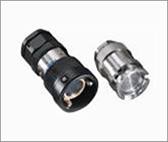
Many spills at a transfer point happen in the few seconds after a hose comes off. Residue drains from the open end of the hose onto the floor. Sometimes onto someone’s boots. A Todo coupling closes off both halves of the connection before they separate, so the line comes away sealed and the work area stays dry.
Where the Mess Stops at the Transfer Point
Sealed Ends on Every Disconnect: A Todo coupling carries a valve in each half, and those valves stay shut until the connection is locked. Reverse the turn and both valves close on their own, a moment before the halves come apart. What stays behind is a thin film on the valve faces. With toxic media, that counts.
Cleaner Runs for Aggressive Chemicals: A Teflon hose resists acids and solvents that would break down ordinary rubber lines, which makes it a natural partner for a dry disconnect coupling on chemical duty. Hose changes stop being a clean-up job. Operators spend less time wiping residue in protective gear, and the next batch stays free of leftovers.
Fifteen Degrees to Lock and a Full Circle to Swivel
One Short Turn to Lock: The coupling locks with a 15-degree turn, made in one movement. Threaded unions need several full turns, and each one can twist the hose along its length. Repeat that every shift and torsional stress builds in the reinforcement, showing up later as cracks near the fitting. Gloved hands manage the short turn without fuss.
Full Swivel, Fewer Kinks: A 360-degree swivel lets the hose rotate freely during transfer. Tankers rarely line up neatly with the bay, and hoses get dragged. Without a swivel, every tug risks a kink. Each kink pushes the product into turbulent flow, and the pump has to work harder to force it past the bend.
Matching the Coupling to What Runs through It
Fluid Comes before Fittings: The fluid decides almost everything else. A body material with poor corrosion resistance can pit and leak on acid duty, even if it copes with water. Size comes next. A connection narrower than the hose bore chokes flow at the joint, which rather defeats the point. Before you order, confirm a few more points:
- Peak pressure with surges included. Averages hide the spikes.
- Temperature at the transfer point, because heat shortens seal life.
- End connections, threaded or flanged.
- How often the line gets broken in a shift.
- The cleaning method, if one line carries more than one product.
- Spare seals kept on site for quick swaps.
Getting the Seal Right: Seals wear out before the metal does. EPDM rubber suits water-based fluids, while FKM copes better with fuels and oils. Get the chemical compatibility wrong and the seal swells, sometimes within days. When a Teflon hose carries the product, PTFE-encapsulated seals give the connection the same resistance to aggressive chemicals as the hose itself.
A Drier Transfer Bay Starts with the Right Match
A single messy disconnect with a hazardous chemical can end in an incident report and a halted line. Sometimes worse. A Todo coupling matched to your fluid and hose gives each changeover a sealed, controlled break. Ask for pressure testing records with every assembly, then explore the available configurations and share your line details for a correct fit.
