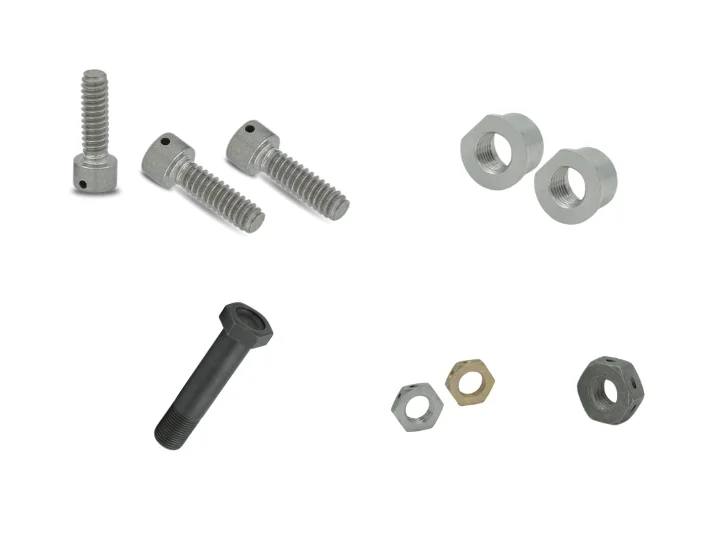
A single fastener that loosens at high altitude can ground an aircraft, or worse cause an accident. That is the quiet pressure behind every bolt, rivet, and self-tapping screw bound for a wing or an engine mount. So when you source these parts from aerospace fastener suppliers, you are not just buying hardware. You are buying proof that someone, somewhere, can showcase their work as being of premium quality.
Two names come up again and again when you weigh aerospace fastener suppliers: AS9100 and Nadcap. They sound like jargon. They are not. They are the difference between a part you can trust and a part you simply hope is fine.
What AS9100 Actually Asks For
AS9100 is the quality management system standard for aviation, space, and defence. The International Aerospace Quality Group developed it, and in the Americas, SAE International publishes it. The current version, Revision D, came out in 2016.
Here is the part that matters for you. AS9100 takes the general ISO 9001 framework and adds requirements built for flight hardware.
- Configuration management, so the part you order is the exact part you receive
- Risk management for problems caught before they reach the line
- Counterfeit part prevention, a real worry in the supply chain
- Product safety and traceability from raw material to finished bolt
An aerospace fasteners supplier holding this certification has agreed to outside audits that check whether the system on paper is the system on the floor. Not a one-time thing either.
Where Nadcap comes in
AS9100 covers the whole quality system. Nadcap goes narrower and deeper. It looks at the special processes that decide whether a fastener will hold.
Nadcap stands for the National Aerospace and Defence Contractors Accreditation Program. SAE set it up in 1990, and the Performance Review Institute runs it. Before it existed, every aircraft maker audited suppliers on its own, so a supplier might face three or four audits for the same process. Nadcap replaced that with one industry-managed standard.For fasteners, the relevant accreditations cover processes like:
- Heat treating, which sets the strength of the metal
- Coatings and chemical processing, which fight corrosion,
- Nondestructive testing, to catch cracks you cannot see
- Fastener and materials testing in accredited labs
The audits are tough on purpose. A supplier responds to every non-conformance and fixes the root cause before accreditation goes through. Reaccreditation keeps coming around too, often on 18 or 24-month cycles depending on past performance.
What Does This Mean When You are Sourcing
You do not need to memorise clause numbers. You do need to ask the right questions.
- Can they show a current AS9100 certificate, not an expired one?
- Are the specific processes for your part Nadcap accredited, or just some unrelated process?
- Will they send full traceability and test reports with the shipment?
A supplier who hesitates on any of these is telling you something. Maybe the paperwork is fine, and they are just slow. Maybe not. Either way, on a part headed into flight hardware, you probably do not want to find out the hard way.
The standards are not there to make your life harder. They exist because the cost of a bad fastener gets paid in the worst possible currency. Picking a supplier who treats AS9100 and Nadcap as routine, rather than a hurdle, is one of the simpler ways to protect yourself.
Featured Image Source: https://sp-ao.shortpixel.ai/client/to_auto,q_glossy,ret_img/https://upsind.com/wp-content/uploads/2024/12/Product-website-13.jpg
